

Division
Industry
Energy, Utilities & Agriculture
Transforming data, tools and ideas from industry, energy and agriculture stakeholders into robust digital products that are quickly deployed and adopted in the field.








INDUSTRY, ENERGY AND AGRICULTURE: DESIGNING AND LAUNCHING USEFUL DIGITAL PRODUCTS
Industrial, energy and agricultural players are now operating in rapidly changing technological environments: modernisation of legacy systems, digitisation of field operations, explosion in industrial data volumes, increased cybersecurity requirements and the gradual integration of artificial intelligence into business processes.
The challenge is no longer just to digitise existing systems. It is about structuring technological platforms capable of connecting industrial systems, exploiting operational data in real time and ensuring the reliability of critical infrastructures that support the performance and sovereignty of organisations.
BeTomorrow's Industry Division supports these transformations, from strategic vision to the industrialisation of digital solutions: modernisation of information systems, development of business applications, data platforms and deployment of operational AI.

A SECTOR UNDER PRESSURE: PERFORMANCE, COMPLIANCE AND SPEED OF EXECUTION

Modernisation of industrial and business application information systems
Industrial information systems and legacy business applications often hinder innovation, data integration and the implementation of new digital services. Modernising this legacy industrial software improves interoperability, security and the ability to connect ERP, MES, IoT and data platforms.
Accelerating Industry 4.0 and Smart Grid projects
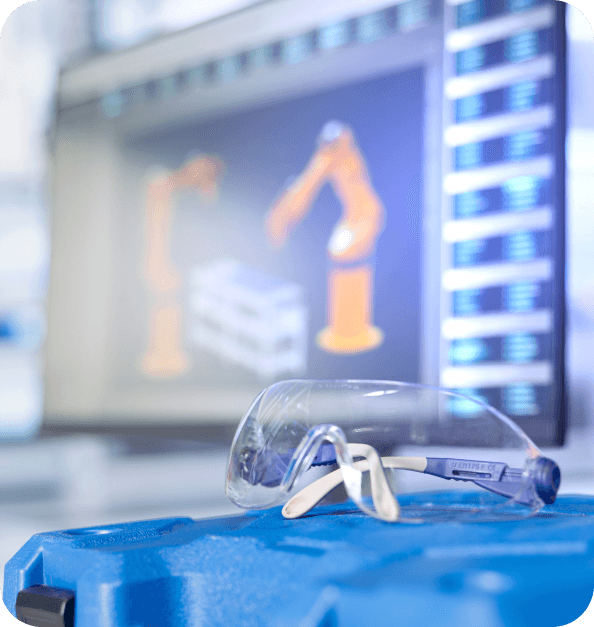
Industry 4.0 and Smart Grid initiatives enable data from machines, sensors and infrastructure to be used to improve operational performance and energy management. The challenge is to transform these experiments into industrialised digital solutions capable of operating on a large scale in industrial and energy environments.

Traceability, quality, compliance (audit, safety, regulations)
Industrial and energy players must ensure complete traceability of operations, products and data in order to meet regulatory requirements and audits. Digital platforms enable automated process tracking, data security and improved regulatory compliance.

Large-scale data mining and AI
Many industrial companies are experimenting with AI but are struggling to move from prototypes to AI that is actually deployed in operations. The challenge is to industrialise data and AI projects using robust platforms, reliable data pipelines and MLOps practices adapted to industrial environments.

Industrial data sovereignty and governance
Industrial companies must maintain control over their production, energy and operational data, which have become strategic assets. Implementing industrial data governance ensures security, regulatory compliance and interoperability between cloud platforms, industrial systems and partners.
Predictive maintenance and equipment performance
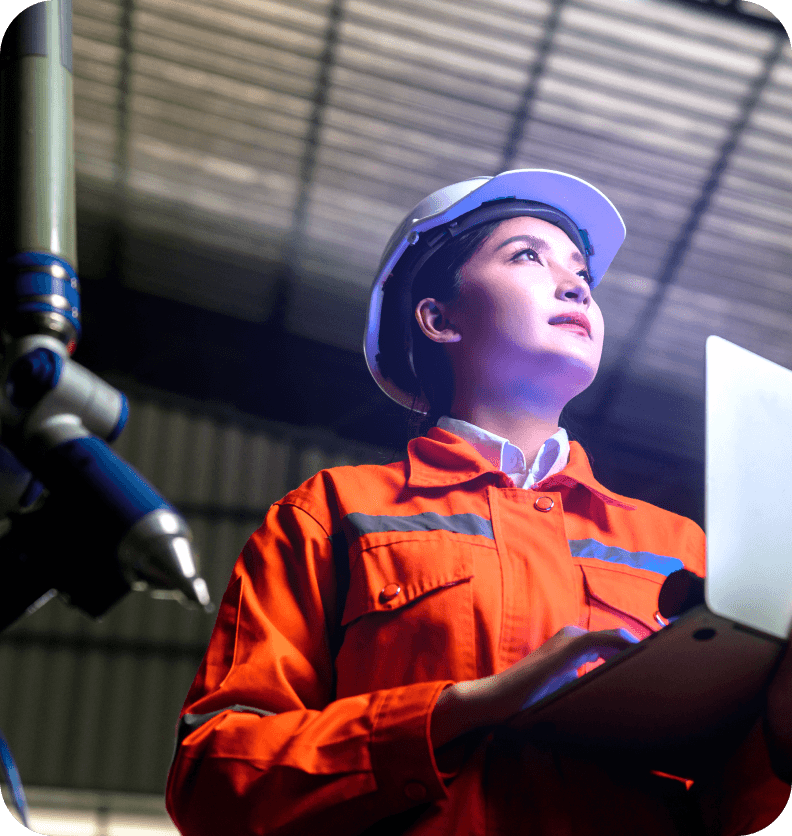
Industrial predictive maintenance uses machine data, IoT sensors and artificial intelligence to anticipate breakdowns before they affect production. By analysing weak signals and equipment history, manufacturers can reduce unplanned downtime and improve plant performance.
Decarbonisation and energy optimisation through data
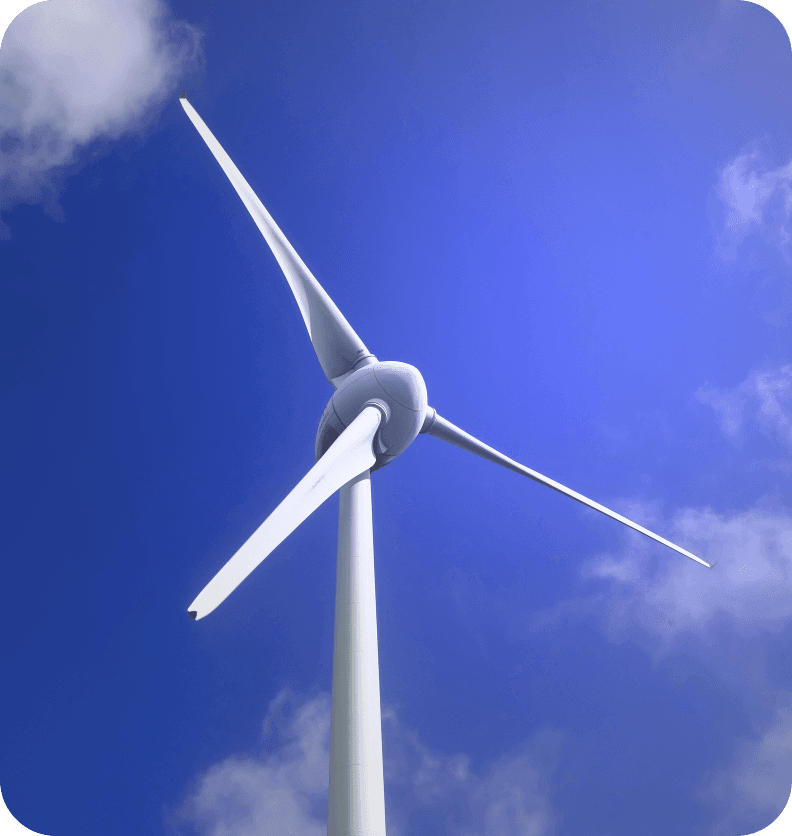
The energy transition is pushing manufacturers to reduce their energy consumption and carbon emissions while maintaining their operational performance. Data platforms and AI enable the analysis of energy usage, the optimisation of processes and the implementation of industrial energy efficiency strategies.
THE KEY FIGURES— FROM THE INDUSTRY
are already using artificial intelligence. Adoption is progressing rapidly in industry, energy and utilities to optimise production, predictive maintenance and data-driven decision-making.
use at least one artificial intelligence technology. This is still a limited rate, which shows the potential for acceleration in industry, energy and agriculture thanks to data platforms and digital products.
needed by 2050. To meet this global demand, agriculture is undergoing a digital transformation: sensors, data, AI and management platforms are becoming essential.
OUR TAILOR-MADE SOLUTIONS
Connected professions
Secure, support and facilitate your field and business teams in order to reduce accidents and errors and improve traceability.
We digitise field operations (maintenance, interventions, inspections):
Offline mobile applications
Management of rounds and interventions
Document and procedure management
Photo/scan/IoT capture
AI control integration
Decision-making dashboards
Make access to strategic data more reliable and easier for all business lines to speed up decision-making (production, maintenance, quality).
We unify and connect all your data in secure platforms. We create automated reporting and enhanced AI access to your internal data.
Customer portals
Build customer loyalty and enhance your brand image Reduce the workload on your support teams and improve your customer knowledge.
We unify and streamline your omnichannel customer journeys, creating new, distinctive services with or without AI.
We integrate UX and UI dimensions in addition to the data and digital solutions we develop.
AI predictive maintenance
Build robust predictive maintenance to reduce your costs and accident risks.
We industrialise AI to detect anomalies, optimise flows, and automate support, documentation, and procedures.
D-risk unit
De-risk your projects, quickly get back on track with a stalled project/product (data/technology) or launch an innovation in record time.
Our D-Risk unit is renowned for its effectiveness in taking on complex cases and launching comprehensive projects in record time.
Exploratory unit
Take advantage of digital and AI opportunities in your sector while controlling costs and risks.
Explore and nurture strategic intelligence
Launch explorations
PoC development
Pre-validate market tests



ALEXANDRE VENTURA
Innovation project manager at SUEZ
The whole team has been very attentive to user needs, uses and acceptance of service by teams. The objective of having a demonstrative proof of concept and winning user membership is reached. Our operators' work facilitation project has efficiently advanced.
The Industry Division brings together consultants, product managers, architects, developers, designers and data, cloud and cybersecurity experts.
As a digital services agency, BeTomorrow covers the entire digital value chain: product vision, software architecture, application development, data & AI, cloud and security. CIR and CII certified,
AI Ambassador, the division supports sustainable, controlled technological investments that are aligned with public policy objectives.








YOU WANT TO START YOUR PROJECT?
Book an exchange with Marc Allaire

QUESTIONS— FREQUENTS
What is the difference between digital transformation and Industry 4.0?
Digital transformation refers to all the technological and organisational changes that enable a company to use digital technology to improve its operations, services and customer experience.
Industry 4.0 is a specific application of this transformation to the industrial sector. It is based on the integration of technologies such as industrial IoT, artificial intelligence, industrial data, automation and digital twins to connect machines, systems and teams.
In practice, digital transformation can affect the entire company (business applications, customer experience, data platforms), while Industry 4.0 focuses on production, maintenance and the optimisation of industrial operations.
Industrial companies generally combine the two: modernisation of information systems on the one hand, and digitisation of operations and production on the other.
How can an AI project be industrialised in industry or energy?
Many artificial intelligence projects remain stuck at the proof of concept (POC) stage. Industrialising AI involves transforming these experiments into tools that are actually used in operations.
This involves several key steps:
Data quality and governance: structuring industrial and energy data sources
Integration into existing systems: ERP, MES, SCADA, data platforms
MLOps and monitoring: automating model training, deployment and supervision
Field adoption: designing interfaces that can be used by operators, technicians or analysts
In industry and energy, the most successful AI projects are those that are designed from the outset as software products integrated into business processes, rather than as isolated prototypes.
How can legacy software be modernised without interrupting business operations?
Many industrial companies still use critical applications developed several years ago, sometimes at the heart of their operations. Replacing these systems all at once is risky and often impossible.
Legacy software modernisation is usually done gradually:
Map technical and business dependencies
Isolate certain functionalities in the form of APIs or microservices
Gradually modernise the architecture and user interface
Migrate critical components without interrupting business
This approach, often referred to as progressive modernisation or the strangler pattern, allows an existing system to evolve while ensuring operational continuity.
The goal is not necessarily to replace everything, but to make the system more flexible, secure and interoperable with new data and AI platforms.
Which AI use cases are the most profitable for manufacturers?
The most profitable AI use cases in industry are generally those that have a direct impact on production, maintenance or quality.
Among the most common applications are:
Predictive maintenance to anticipate equipment failures
Automatic detection of quality defects using computer vision
Optimisation of industrial processes based on production data
Demand forecasting and logistics optimisation
Energy optimisation of industrial facilities
These projects often generate a rapid return on investment, as they reduce production downtime, improve quality and optimise energy resources.
How long does it take to launch a bespoke business application?
The development time for a customised business application depends on several factors: functional complexity, integration with existing systems, required security level and number of users.
In most industrial or energy projects:
A functional prototype can be developed in a few weeks
An initial operational version is generally launched in 3 to 6 months
The application then evolves gradually through continuous improvement cycles
Agile methods and product development make it possible to quickly deliver a useful initial version, then enhance the application based on actual usage.
How can a data platform be secured in a critical environment?
In industrial, energy and agricultural sectors, data platforms often handle sensitive data related to production, infrastructure or operations.
Securing a data platform is based on several principles:
Access and identity management (IAM)
Encryption of data at rest and in transit
Segmentation of environments and networks
Monitoring and anomaly detection
Compliance with security standards and sector regulations
It is also essential to integrate security from the platform design stage, using a security by design approach, in order to limit risks while enabling large-scale data exploitation.